
Schulstandort Freiberger Straße | Berufliches Schulzentrum für Wirtschaft "Franz Ludwig Gehe"
Campus of the "Franz Ludwig Gehe" Vocational School Center for Business and Economics
Building Owner: Landeshauptstadt
Dresden
End User: BSZ "Franz Ludwig Gehe"

FOYER
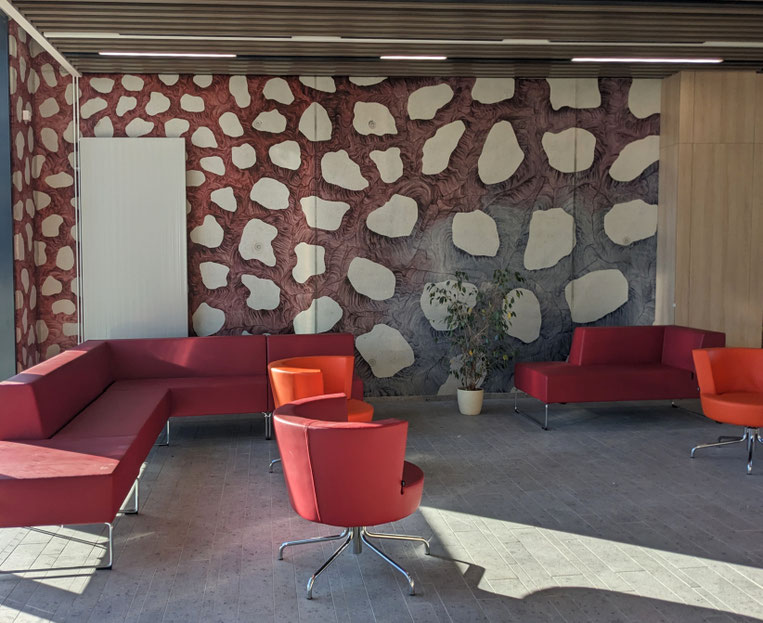
Im Rahmen des 2021 ausgelobten offenen Wettbewerbs für das Berufliche Schulzentrum für Wirtschaft „Franz Ludwig Gehe“ an der Freiberger Straße 30 in Dresden wurde mein Konzept ausgewählt. Seit 2025 habe ich die Möglichkeit, das Foyer, das Treppenhaus sowie sieben Lerninseln gestalterisch zu bearbeiten.
Die Arbeit trägt den Titel CORDA (lat. „Gewebe“) und entwickelt sich aus einem netzartigen Geflecht, das im Untergeschoss seinen Ausgangspunkt nimmt. Dieses Gewebe steht für Vernetzung in vielfältiger Hinsicht: menschlich, fachlich, geistig und auch städtebaulich. Es verweist auf das Lernen selbst – auf das Zusammenführen von Informationen, das Bilden von Verknüpfungen im Denken und auf die neuronalen Prozesse im Gehirn.
Als Berufsschulzentrum für Wirtschaft ist die Schule ein Ort der Ausbildung, an dem nicht nur Wissen vermittelt, sondern auch angewendet wird. Gerade im Bereich von Handel und Wirtschaft spielt Vernetzung eine zentrale Rolle – das Knüpfen von Beziehungen, das Handeln mit Menschen, das Austauschen und Kommunizieren sind grundlegende Voraussetzungen für beruflichen Erfolg.
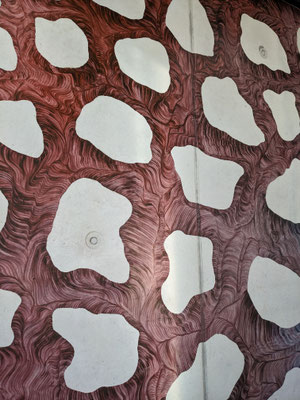
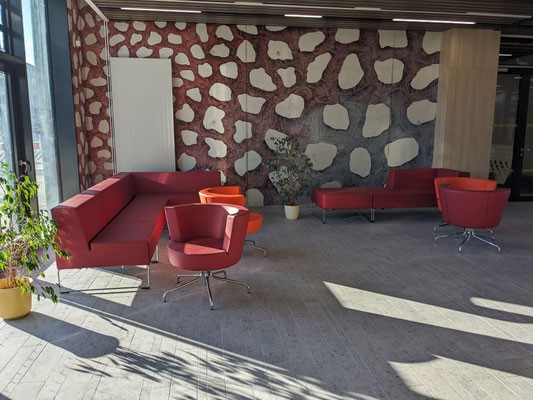
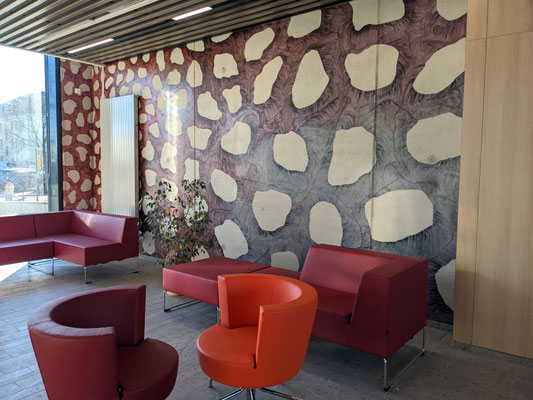
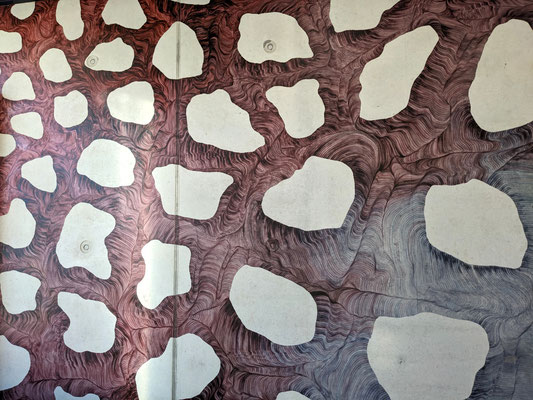
Different views and details
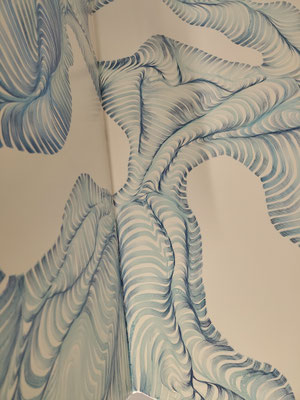
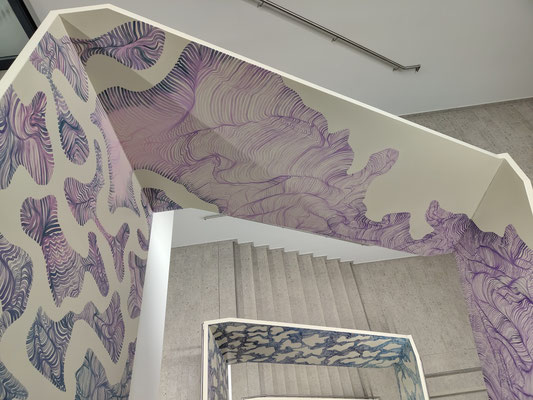
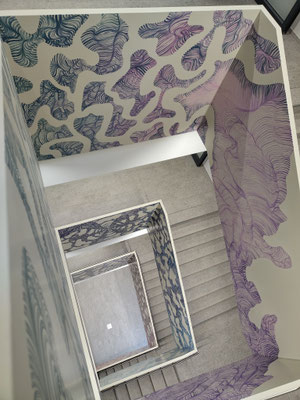
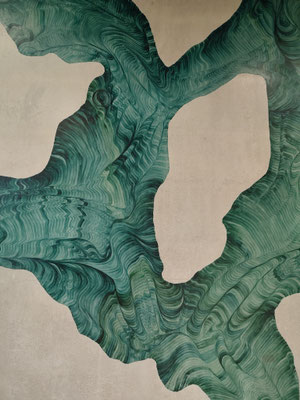
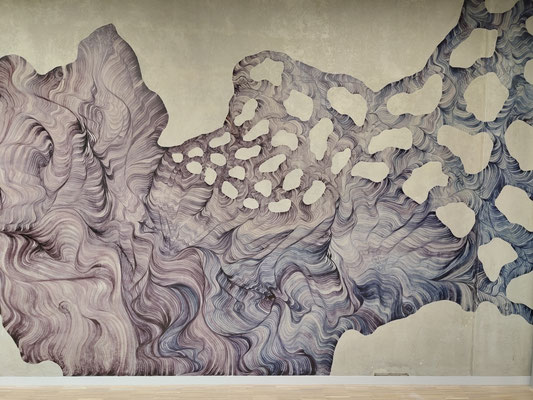
Im Kontrast zur klaren, kantigen und sachlichen Architektur des Gebäudes entfaltet sich im Inneren ein organisches, fließendes System aus Linien. Diese handgezeichneten Strukturen stehen für Bewegung, Offenheit und Prozesshaftigkeit. Jede Linie bleibt als individuelle Spur sichtbar und macht den Entstehungsprozess der Arbeit erfahrbar – als bewusster Gegenpol zur Effizienz und Standardisierung.
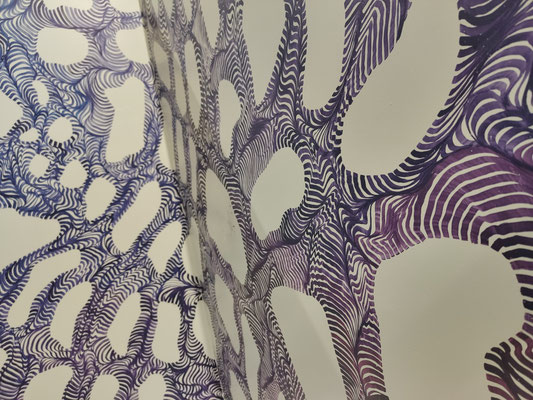
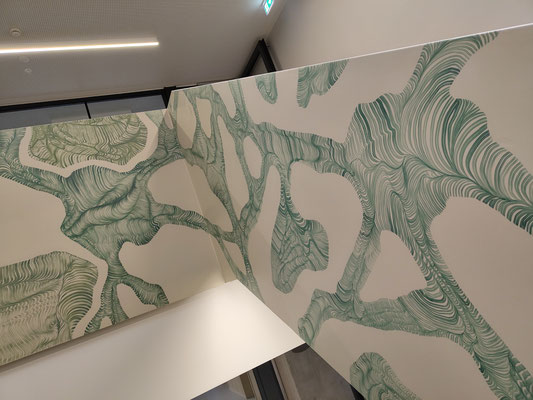
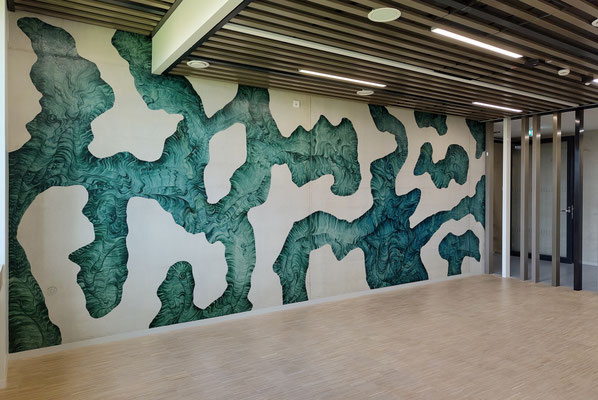
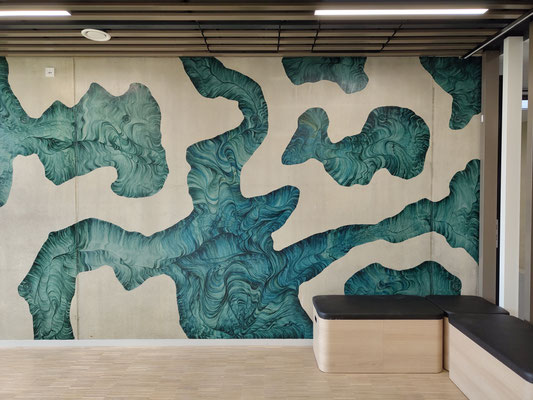
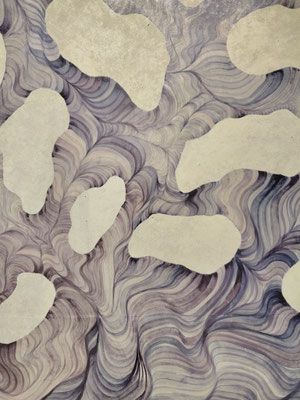
Im Foyer entsteht durch diese Zeichensprache ein neues räumliches Gefüge. Organische Bildwelten sprechen das Menschliche im Menschen an: das Bedürfnis nach Ruhe, Verbundenheit und innerem Ausgleich. Zwischen Zahlen, Fakten und Leistungsanforderungen öffnen sich Räume des Innehaltens, in denen ein anderes Wahrnehmen möglich wird. Die Linien formen ein pulsierendes, atmendes System, das die Besucherinnen und Besucher in eine andere Atmosphäre aufnimmt. Die entstehenden „Denkblasen“ stehen für geistige Freiräume, für Konzentration, aber auch für Offenheit und Wandel.
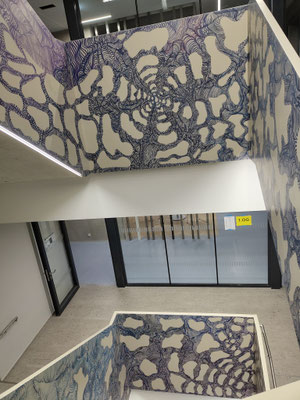
stairwell wall
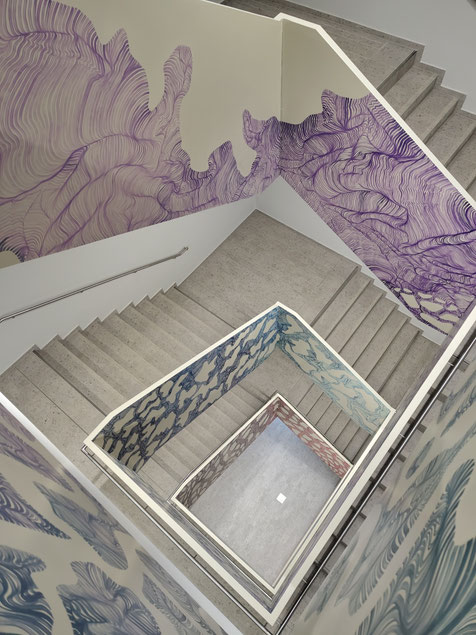
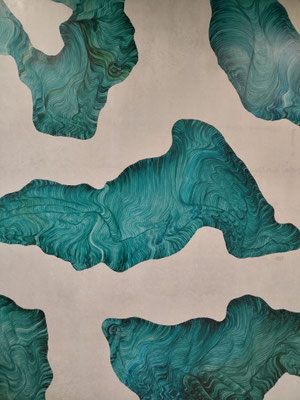
Ergänzend dazu werden innerhalb von vier Etagen insgesamt sieben Lerninseln künstlerisch gestaltet. Diese greifen jeweils die Formensprache des Treppenhauses auf der entsprechenden Ebene auf und übertragen sie in kleinere, räumlich eigenständige Bereiche des Lernens. So entsteht ein durchgängiges System, das sich vom Zentrum des Gebäudes in die einzelnen Nutzungszonen hinein fortsetzt.
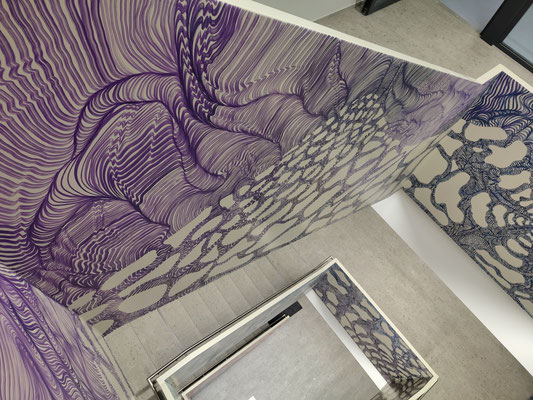
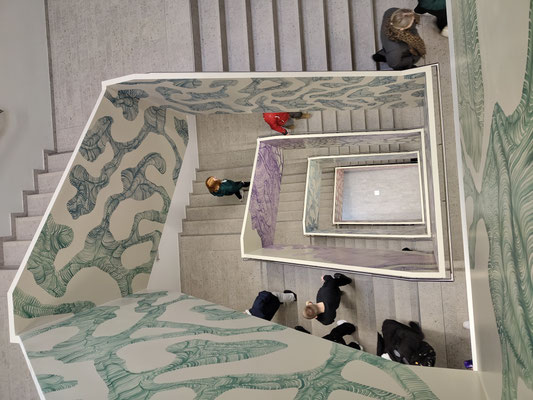
Die Treppe bildet dabei das verbindende Element des Hauses. Auf dem Weg nach oben verändern und verschieben sich die Formen – ein Bild für Lernprozesse selbst: Wissen ist nie abgeschlossen, sondern in ständiger Entwicklung. Je höher man sich im Gebäude bewegt, desto freier werden die Formen und damit auch die Gedanken.
CORDA versteht sich letztlich als Gegenpol zu einer rein effizienzorientierten Welt. In der Verdichtung von Linien, Körpern und Räumen wird ein Bedürfnis sichtbar, das über Funktionalität hinausgeht: die Sehnsucht nach Körperlichkeit, nach menschlicher Nähe und nach sinnlich erfahrbarer Präsenz. Diese Qualitäten sind keine Ergänzung, sondern Voraussetzung für ein lebenswertes Lernen und ein lebenswertes Leben.


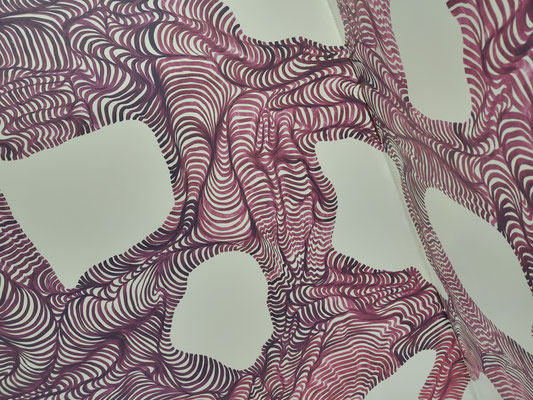
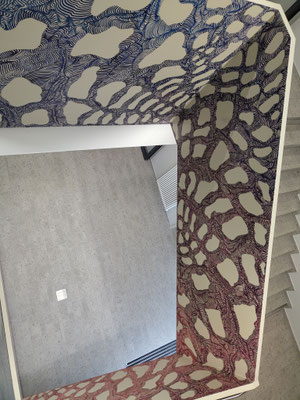




Different views and details
Learning spaces
As part of the open competition launched in 2021 for the Vocational School Center for Business and Economics “Franz Ludwig Gehe” at Freiberger Straße 30 in Dresden, my concept was selected. Since last year, I have been working on the artistic design of the entrance hall, the staircase, and seven learning islands.
The work is titled CORDA (Latin for “weave”) and develops from a net-like structure that originates in the lower level of the building. This woven system represents various forms of connection: human, professional, intellectual, and also urban. It refers to the process of learning itself – the gathering of information, the formation of cognitive links, and the neural structures of the human brain.
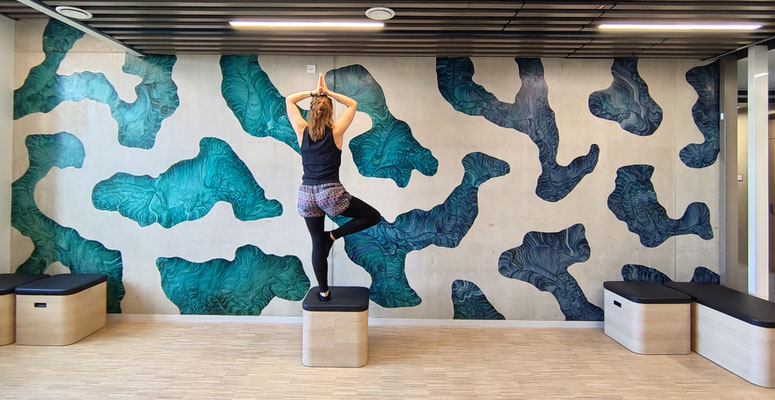
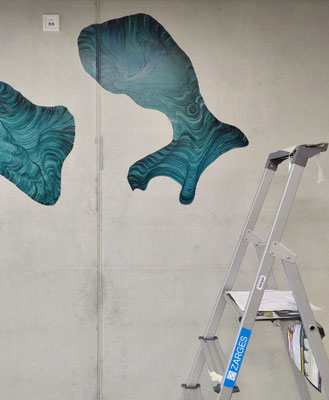
As a vocational school for business and economics, the institution is a place of education where knowledge is not only taught but also applied. In the fields of trade and commerce in particular, networking plays a central role – building relationships, interacting with people, and exchanging and negotiating are essential foundations for professional success.
In contrast to the clear, angular, and rational architecture of the building, an organic and flowing system of lines unfolds within the interior. These hand-drawn structures represent movement, openness, and processual development. Each line remains visible as an individual trace, making the act of drawing and its process perceptible – as a conscious counterpoint to efficiency and standardisation.
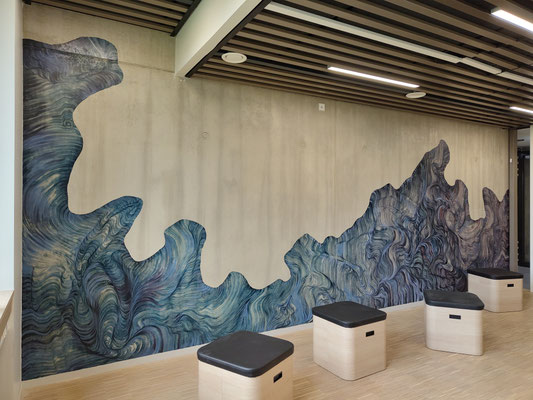
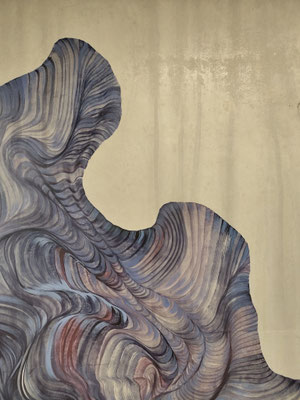
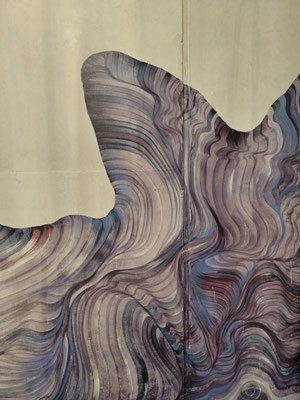
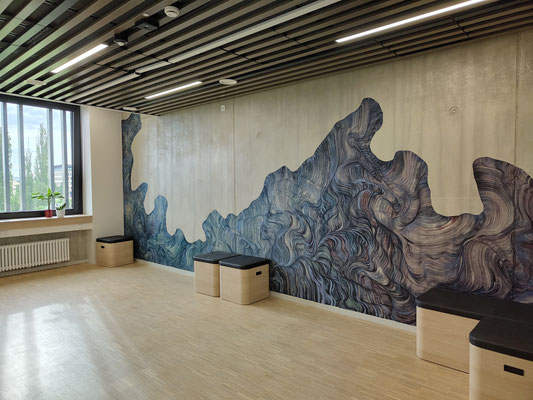
In the entrance hall, this visual language creates a new spatial configuration. Organic visual worlds address the human within us: the need for calm, connection, and inner balance. Between numbers, facts, and performance demands, spaces of pause emerge in which a different mode of perception becomes possible.
The lines form a pulsating, breathing system that immerses visitors in a distinct atmosphere. The emerging “thought bubbles” stand for mental free spaces – for concentration, openness, and transformation.
In addition, a total of seven learning islands are being artistically designed across four floors. Each of them adopts the formal language of the staircase on its respective level and translates it into smaller, autonomous spatial units of learning. In this way, a continuous system emerges that extends from the centre of the building into its various functional areas.
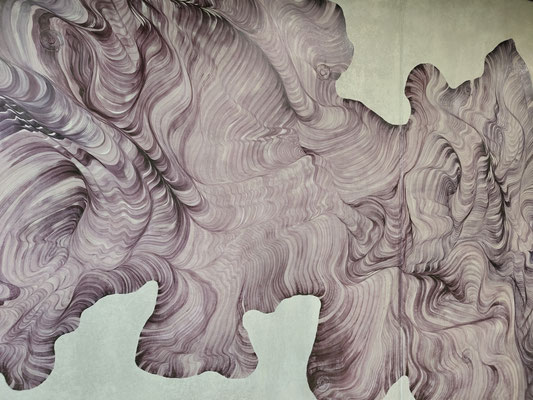
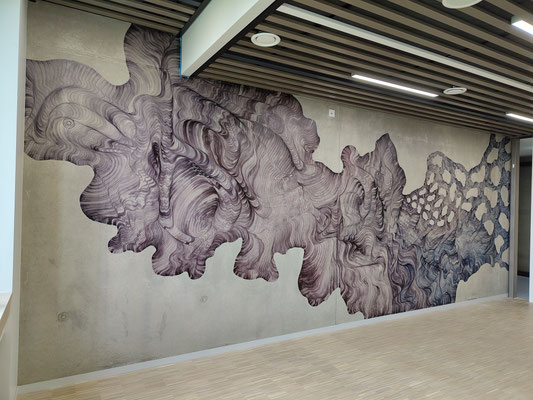
The staircase acts as the connecting element of the building. As people move upwards, forms shift and transform – an image of learning itself: knowledge is never complete but in constant development. The higher one moves through the building, the more open the forms become, and with them, the thoughts.
Ultimately, CORDA can be understood as a counterpoint to a purely efficiency-driven world. In the condensation of lines, bodies, and spaces, a fundamental human need becomes visible – the longing for physical presence, for human closeness, and for sensorial experience. These qualities are not an addition but a prerequisite for a livable education and, ultimately, a livable life.